Incubation

Using recently developed techniques almost any fertile egg can be successfully hatched. Eggs differ in their incubation requirements, some need a slightly different temperature or humidity, while others need to be turned more often.

incubation


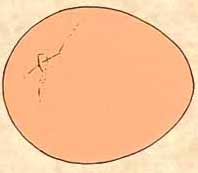
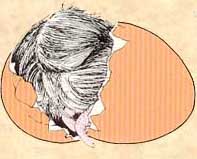
The Chick begins to Hatch 
 incubation courses
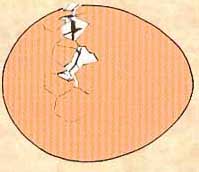
Hatching begins in Earnest  humidity
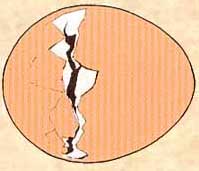
Cutting the Circle      temperature
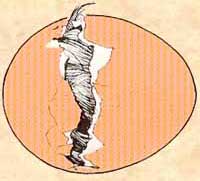
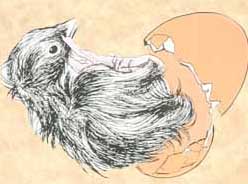
Almost There          hatching
  One Final Push                   incubating eggs
 Out at last fertility

Egg Turning
Research has shown that different eggs need to be turned in different ways. Some are best turned automatically by roller or trays which tilt them to a 45 degree angle while others need to be turned side to side by hand up to seven times a day.

.

Incubation Temperature
It is very important that the temperature in an incubator does not fluctuate too greatly. Most eggs should be incubated at 37.3C with no more than half a degree fluctuation up or down.
.

Weight Loss and Humidity
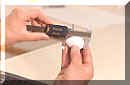
Eggs lose weight as they develop. A fresh egg with a density greater than water will sink, while one nearer to hatching with a lower density will float.
By weighing eggs regularly, calculating density and using existing data it is possible to adjust an incubators humidity to the correct levels.
.

Candling
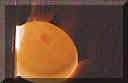
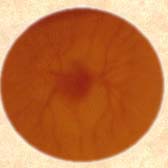
This is the technique of observing the egg development through the shell. It is a simple matter of shining a bright light through a hole in front of which an egg is placed.

Hatching
This is by no means a speedy process and can take up to four days. The first stage is known as the internal pip. This is when the chick breaks through the inner membrane into the air space inside the egg. At this point eggs should be moved into a separate incubator. This is necessary as eggs can release bacteria which would infect eggs still being incubated.

The hatching incubator has a temperature 1 degree lower than normal since the chicks are already producing their own body heat. It also has a humidity as high as is possible, which helps the chicks break through the shell. It will take the chick a day to pip, that is breaking the first hole in the shell. After this, being able to breath easily, it will rest for one or two days before hatching out.


parrot eggs Eight
Day
Old Kookaburra
Chick

Incubation Courses

Rob Harvey runs incubation courses on a regular basis which cover everything from basic techniques, where most mistakes are made, right up to the latest methods that are being used. These one day courses are for a maximum of ten people at a time, which allows everyone to ask questions as progress is made. You receive a copy of the book 'Practical Incubation' plus various samples and literature. So whether you are about to buy your first incubator or you want to improve your hatchability, these courses will help!

E-mail us, should you want to know when our courses are taking place  

 candling
 weight loss
 incubation  courses
 bird breeders

eggfood - parrot hand rearing food - books - videos -zoo supplies - breeders directory


 bird breeders


Rob Harvey Zoological Supplies
Kookaburra House
Gravel Hill Road
Holt Pound, Farnham
Surrey, GU10 4LG
Tel      Fax
exotic birds
 
 
The Links Page